
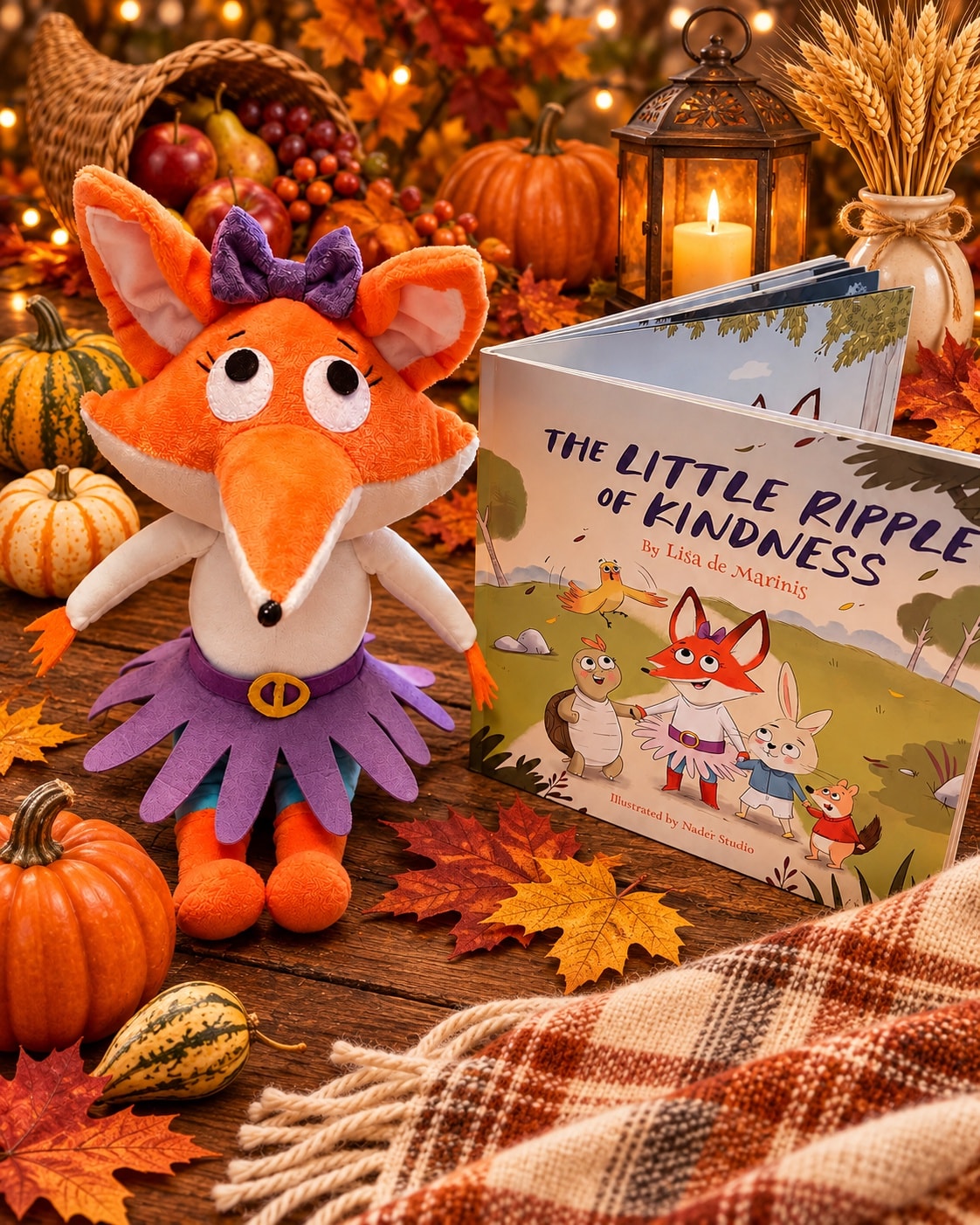
How Lily the Fox Teaches Kids to Be Kind — A Parent's Guide
The Little Ripple of Kindness was written with this in mind. Lily the Fox isn't a perfect character who always does the right thing. She's curious, a little uncertain, and ultimately brave enough to reach out to someone who needs her. That combination — imperfection plus courage — is what makes her so relatable to young children, and so useful as a teaching tool for parents.
Here's how to use Lily's story to open real conversations about kindness with your child.
Why Stories Teach Kindness Better Than Lectures
Before we get into the specifics of Lily's story, it's worth understanding why picture books are such powerful vehicles for social-emotional learning.
When children hear a story, they don't just receive information — they experience it. They inhabit the perspective of the characters. They feel what the characters feel. And because the story is happening to someone else (a fox, not them), they can engage with difficult emotions and moral questions without the defensiveness that often comes with direct instruction.
Research in developmental psychology confirms this: children who are regularly exposed to stories featuring empathetic characters develop stronger theory of mind — the ability to understand that other people have thoughts, feelings, and perspectives different from their own. This is the foundation of kindness.
The Ripple Effect: A Concept Children Can Grasp
One of the central ideas in The Little Ripple of Kindness is the ripple effect — the notion that a single kind act doesn't just affect one person, but spreads outward in ways we can't always predict or see.
This is a surprisingly accessible concept for young children, especially when it's illustrated concretely. A stone dropped in water. A smile passed from one person to the next. A small act of sharing that leads to a chain of generosity.
When children understand the ripple effect, they begin to see their own actions differently. They're not just being kind to one person — they're potentially changing the course of someone's whole day, which might change how that person treats the next person they meet, and so on.
That's a powerful idea to plant early.
Conversation Starters to Use While Reading
The best time to have a kindness conversation is during or immediately after reading — when the story is fresh and the emotions are still present. Here are some questions to try at different points in the book:
Before you begin
- "What do you think this book is going to be about?"
- "Have you ever done something kind for someone? What happened?"
During the story
- "How do you think Lily is feeling right now?"
- "Why do you think she decided to help?"
- "What would you have done if you were Lily?"
After the story
- "What was your favorite part? Why?"
- "Do you think Lily's kindness made a difference? How?"
- "Can you think of a time when someone was kind to you? How did it make you feel?"
- "What's one kind thing you could do tomorrow?"
These questions don't need long answers. Even a brief exchange — a child saying "I think she felt scared but she did it anyway" — is a meaningful moment of reflection.
Extending the Story Into Daily Life
The real power of a book like The Little Ripple of Kindness isn't in the reading itself — it's in what happens afterward, when the story becomes a lens through which children see their everyday experiences.
The "ripple" language
Once children have heard the story, you can use "ripple" as shorthand in daily life. "That was a kindness ripple!" when a child shares with a sibling. "I wonder what ripple that started?" when you witness a stranger helping someone. The language from the book becomes a shared vocabulary for noticing and naming kindness in the world.
Kindness spotting
Make it a game: who can spot the most acts of kindness in a day? At dinner, go around the table and share one kindness you noticed — something someone did for you, something you did for someone else, or something you witnessed between strangers. This practice builds the habit of attention — of actively looking for kindness rather than taking it for granted.
The kindness jar
Keep a jar in a visible spot in your home. Whenever a family member does something kind, write it on a slip of paper and add it to the jar. At the end of the week, read them aloud together. This ritual makes kindness visible and celebrated — and children quickly learn that kindness is something their family values and notices.
A Note for Parents: Modeling Matters Most
All of these strategies work best when children see kindness modeled by the adults in their lives. Books can plant seeds, but the soil is the environment you create at home.
When you apologize sincerely, when you help a neighbor, when you speak kindly about someone who has frustrated you — your child is watching. They're learning what kindness looks like in real life, not just in stories.
Lily the Fox is a wonderful teacher. But you're the most important one.
Give your child the gift of Lily's story this holiday season